Medicago denticulata Willd. Medicago hispida Gaertn. Medicago lappacea Desr. Medicago nigra Willd. Medicago polymorpha var. vulgaris (Benth.) Shinners
Botanical Description
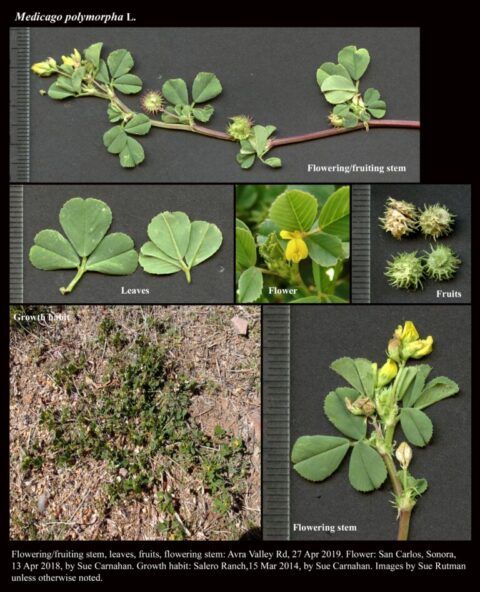
Medicago polymorpha L. is an annual herbaceous legume characterized by a prostrate to semi-erect growth habit with extensive branching from the base
Stems
The stems are slender, angular, and sparsely pubescent, reaching 10-60 cm in length.
Leaves
Leaves
Leaves are alternate and trifoliate, with obovate to obcordate leaflets measuring 5-20 mm long and 4-15 mm wide. Leaflets display finely denticulate margins in the upper half and are glabrous to sparsely pubescent on both surfaces. A characteristic dark purple spot often marks the center of each leaflet. Stipules are lanceolate, deeply laciniate, and persistent.
Flowers
Flowers
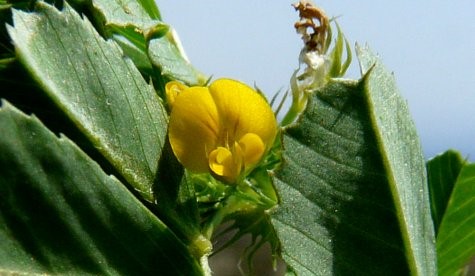
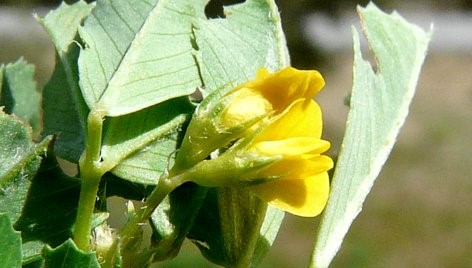
Flowers are bright yellow, papilionaceous, measuring 3.5-6 mm in length, and arranged in compact axillary inflorescences of 2-10 florets. Peduncles are slender, equaling or slightly exceeding the length of the subtending leaf. The standard petal is longer than the wings and keel.
Pods
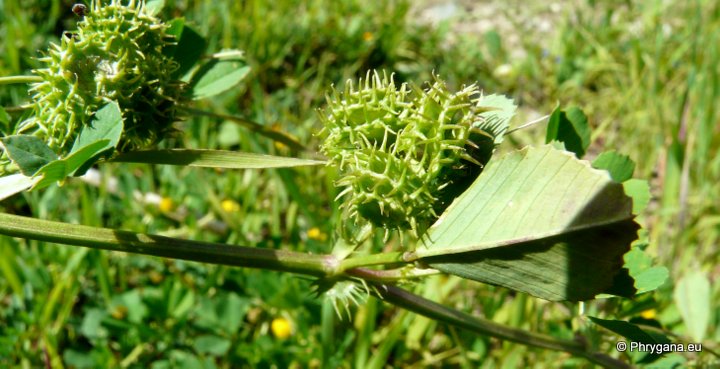
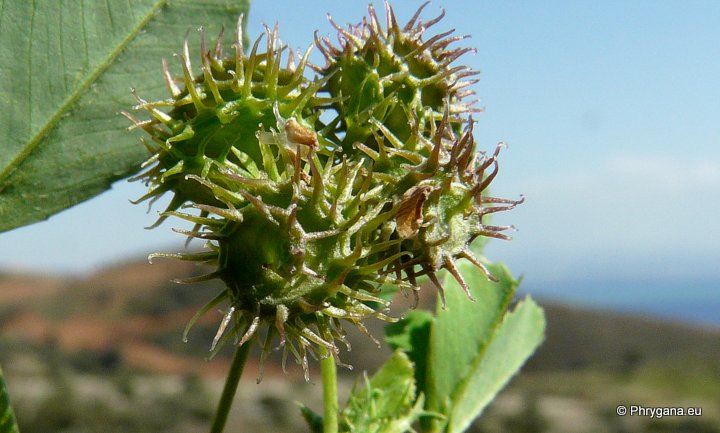
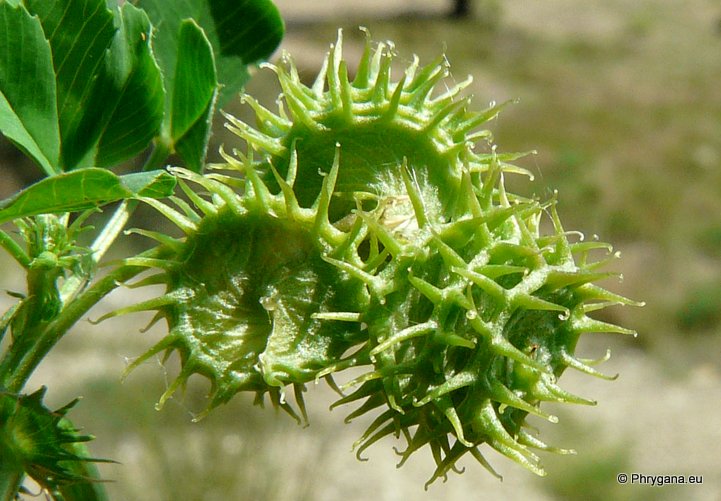
Fruits are distinctive globose to cylindrical spiny pods, 4-7 mm in diameter, forming 3-5 loose, dextrose (clockwise) coils. The pod surface bears 2-3 rows of prominent curved or hooked spines along each coil margin, with spines measuring 2-4 mm in length.
Seeds
Seeds are smooth, yellow-brown to olive-green, ovoid to reniform, approximately 2-2.5 mm long, with a characteristic hooked radicle