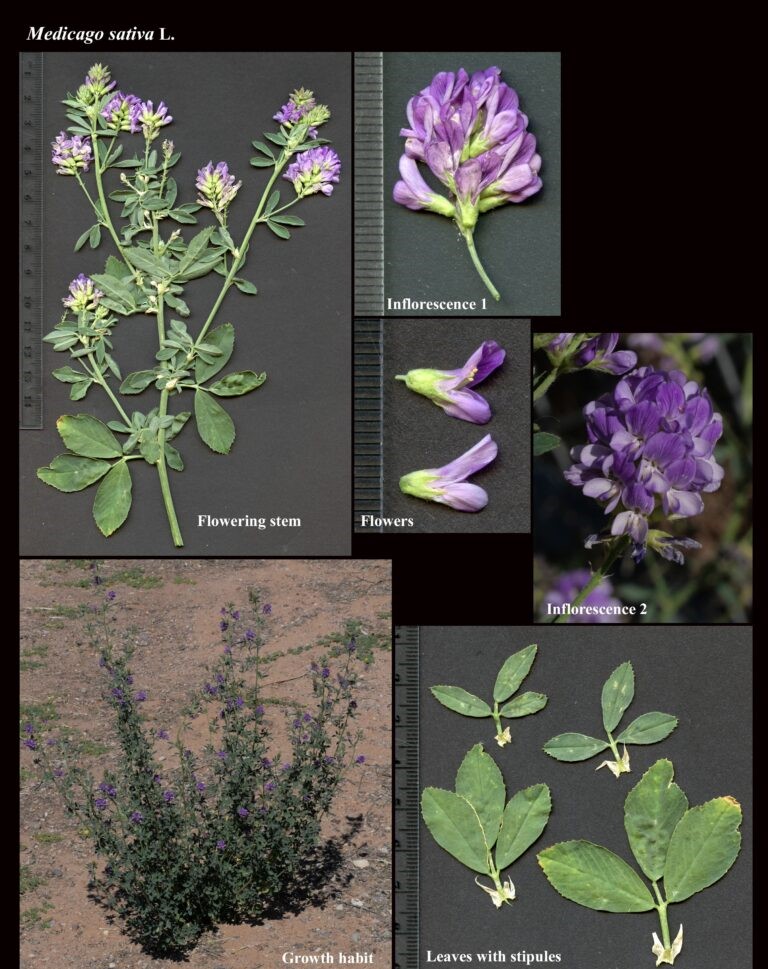
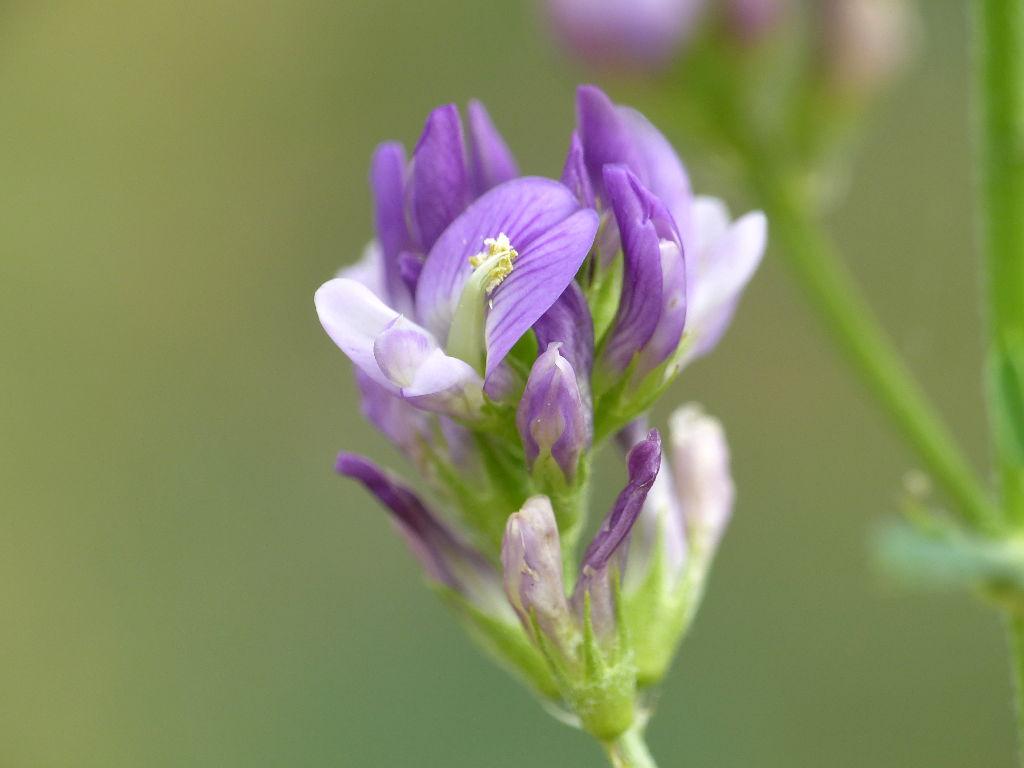
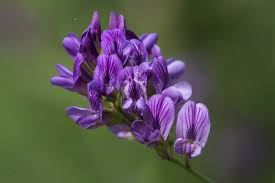
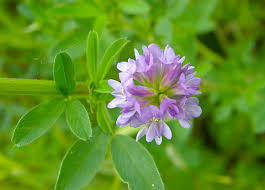
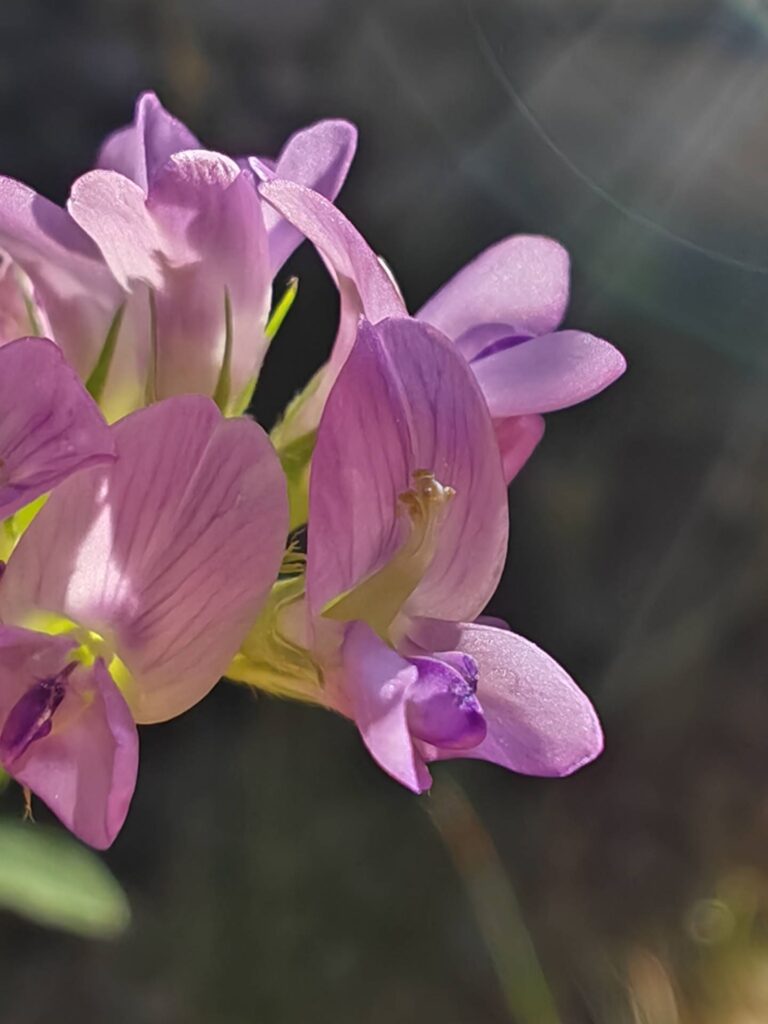
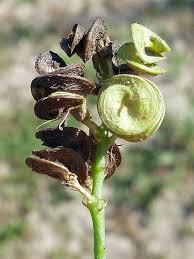
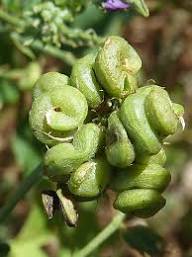
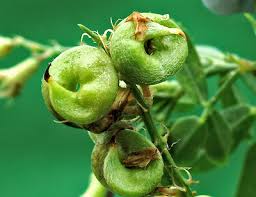
Morphological characterization of Medicago sativa, the world's most important forage legume, displaying erect growth habit, purple-violet flowers, and characteristic coiled seedless pods
Leaves
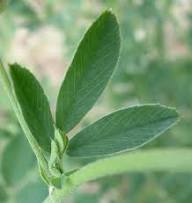
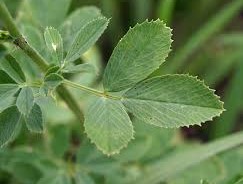
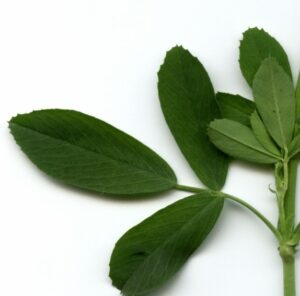
Leaves are alternate and trifoliate, with oblong to oblanceolate leaflets measuring 15-30 mm long and 4-10 mm wide. Leaflets are entire to slightly denticulate in the upper third, glabrous or sparsely pubescent, with prominent venation. Stipules are lanceolate, entire to slightly dentate, and semi-clasping.
Flowers
Flowers are purple to violet (rarely white or yellow), papilionaceous, measuring 8-12 mm in length, and arranged in dense racemose inflorescences of 10-35 florets. Peduncles are elongate, exceeding the subtending leaf. The standard petal is longer than the wings and distinctly longer than the keel.
Pod Architectural Diversity
Fruits are spirally coiled, unarmed pods forming 1.5-4 loose coils, 5-8 mm in diameter, glabrous or sparsely pubescent. Pods are indehiscent, containing 10-20 seeds. The coils are sinistrose (counterclockwise) and lack spines or tubercles.